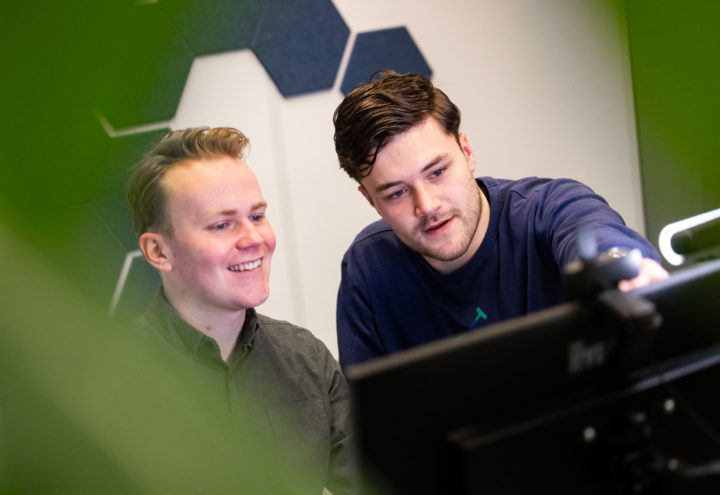
In Ovo leads the field of in-ovo sexing technology with their revolutionary machine line, Ella. This advanced system can determine the sex of fertilized chicken eggs early in the incubation process, allowing for the removal of male eggs before they develop into chicks. This innovation eliminates the need for the controversial practice of destroying live male chicks, which remains common in today’s poultry industry.
The biggest challenges
As In Ovo began operating their Ella machine line, they faced several operational challenges. The company had not yet established training standards or standard operating procedures, and failures and deviations were being tracked solely through Excel spreadsheets. Adding to the complexity, the continuous development of the machine line led to frequent changes in working methods. Furthermore, with plans for worldwide deployment, In Ovo needed standardized procedures that could be implemented globally.
Operating in both R&D and production environments, In Ovo required a robust standardization system. To address this need, they partnered with TWI company and ELICIT Online, combining TWI’s methodology for shop floor excellence with ELICIT Online’s process control capabilities.
The best solution
Rob van Hemert, Operations Director at In Ovo, explains: “We needed standardization to make production efficient, encompassing training standards, process control, quality assurance, and maintenance.”
TWI implementation and training standards
TWI company supported In Ovo by documenting all operations and tasks related to Ella and developing comprehensive training programs. Their method breaks down complex work into clear, standardized tasks, creating training standards for consistent skill development. The approach proved highly effective, enabling operators to achieve error-free performance quickly.
TWI company then transferred their expertise to In Ovo’s team, teaching them to write their own training standards, conduct training sessions, and perform audits. This knowledge transfer resulted in a standardized onboarding plan suitable for global deployment. The standardization ensures that regardless of which TWI trainer conducts the training, the content and quality remain consistent.
ELICIT Online integration
ELICIT Online complemented the TWI implementation by capturing the knowledge of experienced operators and technologists through structured interviews. The system documents core processes, monitoring procedures, and control instructions, while also recording malfunctions and providing troubleshooting procedures. Training standards are made accessible to certified trainers, and multi-language support through automatic translation ensures global accessibility.
Van Hemert notes: “ELICIT Online has exceeded our expectations. What began as troubleshooting for one component now encompasses our entire quality system, including checklists, maintenance, and startup procedures. It has become our comprehensive handbook.”
Continuous improvement
The system’s flexibility allows In Ovo to adapt to ongoing developments. Knowledge files and training standards can be updated as machine development continues, with operators able to suggest changes through the knowledge file system. Staff receive automatic notifications of procedural updates, while problem tracking and malfunction monitoring support better quality management and performance metrics.
Results and future outlook
The combination of TWI methodology and ELICIT Online has transformed In Ovo’s operations, enhancing machine line management and control while improving operator training and performance. The system provides the capability for global deployment with standardized instructions, along with improved quality control and performance monitoring.
Van Hemert emphasizes their ambitious goals: “We aim to deploy our machine line anywhere in the world with standardized instructions, ensuring operators follow our established procedures precisely. This systematic approach to recording problems and managing quality is essential for moving from 95% to 100% efficiency and achieving world-class status.”
Relevant cases


Lemoine: Operators in control
Lemoine Holland is part of the Lemoine group and specializes in hygiene products. A common challenge faced by Lemoine Holland in Emst: How do I get my operators to the level where they know what, how and when to adjust?

Reginox: More grip on quality
Reginox expects major changes in its workforce and the labor market leading to higher employee turnover. Experienced employees are retiring and finding new personnel is a challenge. For Reginox a reason to work with ELICIT Online on knowledge management.
JDE Joure: Less questions and disruptions, higher efficiency
JDE Joure is part of JDE Peet's, producer of a.o. Douwe Egberts coffee, L'Or and PickWick tea. Within the coffee factory of JDE in Joure is located the Liquid packaging department. Here, a liquid coffee solution for the hospitality industry is packaged. When a malfunction or problem occurs in the the packaging department, operators were not always able to solve it independently. A few very experienced operators have the necessary knowledge, as do the team leaders and the production manager. As a result, they were regularly overcharged when problems arose. Another wish of JDE was to increase the efficiency of this packaging line. JDE also wanted to increase the efficiency of this packaging line.
Total Packaging shifts from constantly putting out fires to optimizing processes
Production at Total Packaging in Harderwijk is growing rapidly. New lines, new shifts, new employees and one experienced box maker whose knowledge the organization heavily depends on and who is nearing retirement. Dirk Bilardie (Manager Continuous Improvement) and Dave Kuijsten (Production Team Manager) explain how they are capturing that knowledge before he leaves the company.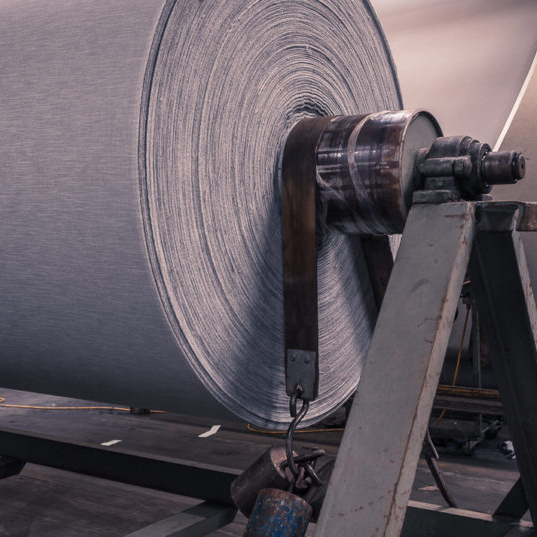

Ten Cate: Investing in efficiency and in people
The company has gone through an ambitious growth program. A large-scale improvement process with a desired output: higher delivery reliability, higher output and a more consistent product quality. In order to achieve this, better training and a higher level of knowledge among the operators is necessary. That meant only one thing: investing in efficiency and in people.
Sharing knowledge is in our DNA