
About Lemoine Holland
“How do I get my operators to the level where they know what to adjust, how to adjust it, and when to make those adjustments?”
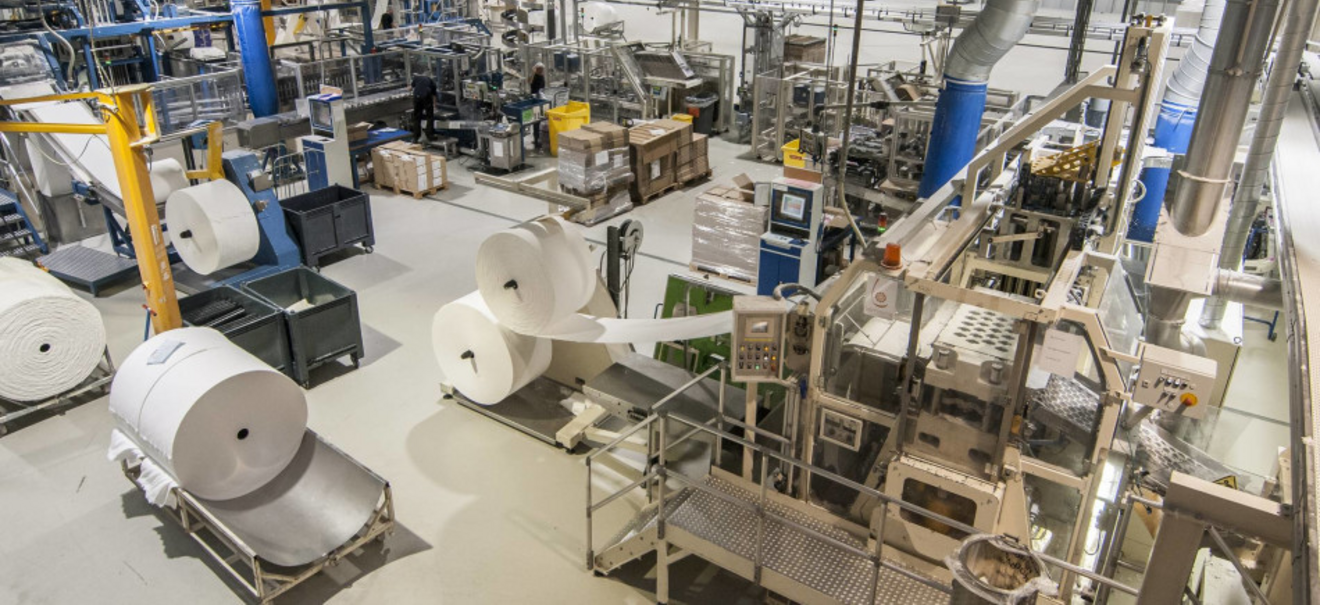
This is a common challenge that was also faced by Lemoine Holland in Emst. As part of Groupe Lemoine, the company specializes in hygiene products. Their Emst facility produces various types of cotton pads, which are punched out of fleece material.
For the core process of fleece production, this challenge has been addressed through a combination of Training Within Industry (TWI) task training and the capture and transfer of experiential knowledge using ELICIT Online.
“Operating” with TWI
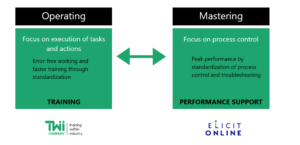
Lemoine Holland was already familiar with recording and training tasks according to TWI principles, having their own TWI writers, trainers, auditors, and a TWI coordinator. To perform a task properly – error-free and standardized – the primary focus is on “serving.” This is what TWI training addresses: the execution of actions and tasks. But then comes the question: how do you ensure that operators are truly “in control”? In other words, how do they learn to master the process?
“Controlling” with ELICIT Online
Knowledge often exists within an organization but isn’t always accessible and available to everyone. At Lemoine, expertise about the production lines resided in the minds of different experts: technology specialists, engineers, and various senior operators. In practice, it became apparent that even among specialists, there were different approaches to making adjustments. The challenge was: how do you extract this experiential knowledge from these experts’ minds, and what should become the standard? Using ELICIT Online’s software solution, Lemoine independently captured this valuable experiential knowledge in a structured and efficient manner. The expertise from different departments is now consolidated in a knowledge file that shows the essence of process and quality control in a single overview, including the most important cause-and-effect relationships.
How does it work?
Let’s start at the beginning!
A new employee first receives training in a predetermined set of tasks through TWI, learning how to perform all operations before starting work in production. Meanwhile, the knowledge file contains the collected and calibrated expertise from various experts. During production, when process adjustments become necessary due to manufacturing challenges, the employee knows how to perform all tasks – but what actions should be taken, and when should they be implemented?
Here’s a practical example:
An employee measures the fleece thickness and notices a deviation. The knowledge file shows what possible actions should be taken. It specifies the adjustment parameters, including allowable ranges and step sizes, along with expected effects. For instance, if the fleece is too thin, the operator should adjust the dryer temperature (measurable after a few minutes) by a maximum of 10 degrees above or below the recipe value, using 5°C increments. A 5°C adjustment results in 0.5mm additional fleece thickness. The actual procedure for adjusting the dryer has been learned through TWI training.
The knowledge file also includes information about the most common faults and disturbances. Since every employee receives the same TWI training, experienced operators can use the actions documented in ELICIT Online to give less experienced colleagues specific tasks – for example, adjusting the oven in 5-degree increments.
It’s truly learning by doing!
Lemoine speaking
“New operators have made intensive use of the knowledge file and can therefore begin working independently much more quickly. The training period has been considerably shortened,” reports Berry van de Hoop, Operations Manager at Lemoine Holland.
“Beyond its effectiveness for new operators, our experienced operators are also very enthusiastic about the system!”
“The cause-effect relationships are clearly visible and ensure rapid application of knowledge. Operators can easily add new information, allowing the knowledge file to continuously grow and improve.”
“The result of all these actions is that our fleece quality has improved significantly!”
Relevant cases
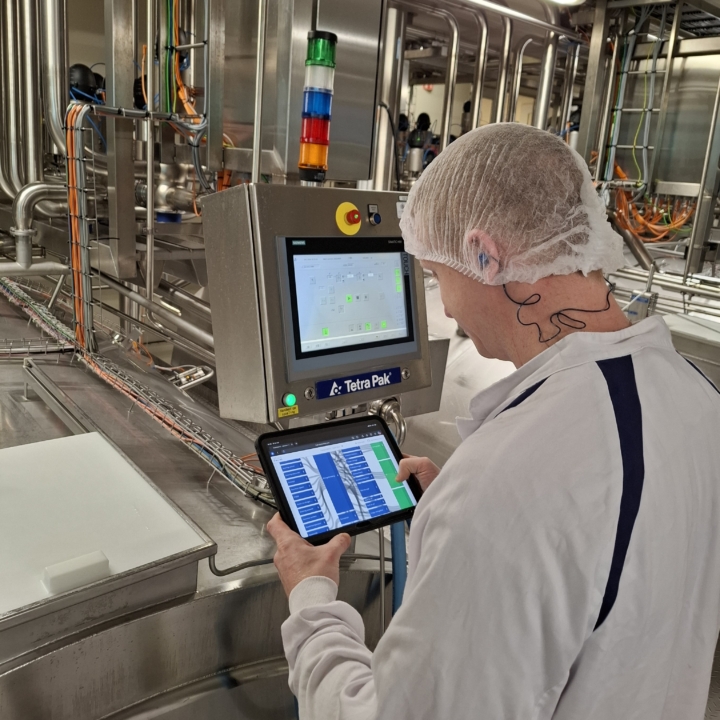
When the master leaves: how CONO preserves half a century of cheese-making expertise
The retirement of team leader Pieter (50.5 years of experience) confronted cheese producer CONO with a major challenge: how do we ensure that the knowledge of such experienced people is retained? Arthur van Esveld, Production Manager, and Mike Koster, the new Team Leader Cheese Production, explain: “With ELICIT, every operator has autonomy.”

Mondi: Faster training and less unplanned downtime
Mondi Heerlen is part of Mondi, a global leader in the sustainable paper and packaging industry. Mondi Heerlen produces release liner, a product used in the production of feminine hygiene products, among others.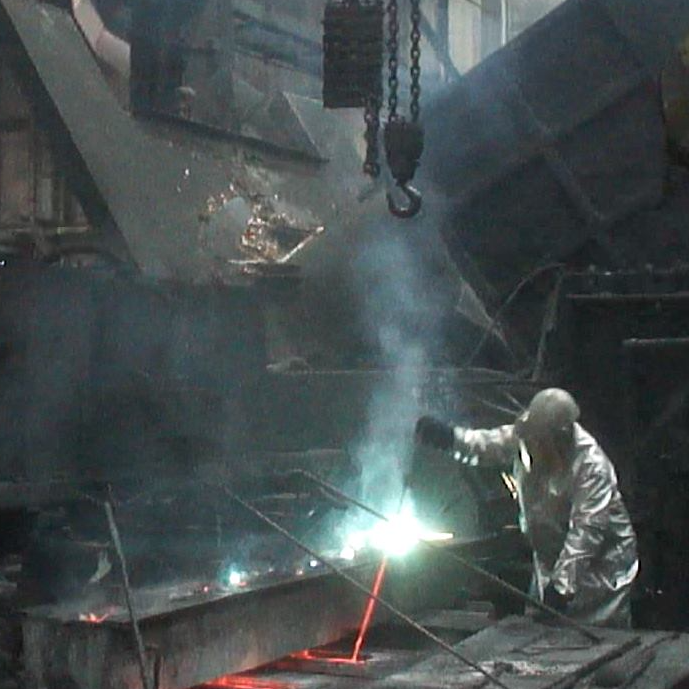

Casting legend Olle Lofgren heads for the snow, but his knowledge stays in Zutphen
There is hardly anyone in the world with more casting knowledge than Olle Lofgren. But after more than 50 years in the metal industry, working in factories all over the world, the Swedish casting specialist is retiring from KME. With the help of ELICIT, he is now leaving his knowledge behind for future generations. Olle: “It felt like someone opened my memory of the past decades.”
Total Packaging shifts from constantly putting out fires to optimizing processes
Production at Total Packaging in Harderwijk is growing rapidly. New lines, new shifts, new employees and one experienced box maker whose knowledge the organization heavily depends on and who is nearing retirement. Dirk Bilardie (Manager Continuous Improvement) and Dave Kuijsten (Production Team Manager) explain how they are capturing that knowledge before he leaves the company.

Van Merksteijn: Less downtime
Van Merksteijn Fencing Systems ran into a number of problems in production. Breaking in new employees took a lot of time. Also, the training program for new employees was not available digitally. Another major pain point for Van Merksteijn was the lack of a uniform working method. In addition, employees have a lot of experience knowledge, but it was not recorded anywhere. That knowledge was in danger of being lost when they retired. Finally, operators were dependent on other, more experienced colleagues for breakdowns and other problems. That cost time, and therefore money.
Sharing knowledge is in our DNA