You have the experts, but do you also have the knowledge?

You have fifteen operators on the shop floor. Three of them have been working there for more than twenty years. And yet the line comes to a standstill as soon as that one operator, let’s call him Joe, is not there. How is that possible, with so much experience on the floor? And how do you solve it? You’re probably looking in the wrong place.
The assumption that leads you in the wrong direction
The idea is that a lack of knowledge is a quantity problem. You simply need to hire more experienced people, create more manuals, organize more training days, and increase shadowing. But there is a fundamental difference between someone who knows a lot and someone who can make decisions. As long as you don’t recognize that difference, you won’t solve the problem.
What an expert actually has
A good operator builds something over the years that no manual can capture: decision logic. This logic is formed through actions performed intuitively, without conscious thought. Think of a combination of sounds and smells he monitors subconsciously, or a pattern he recognizes before it leads to a production stop.
“He just has a feel for it,” colleagues often say. But what they really mean is that this operator sees cause-and-effect relationships that have never been made explicit or written down. It’s not knowledge in the traditional sense, but a kind of intuition built through experience.
“He just has a feel for it,” colleagues often say. But what they really mean is that this operator sees cause-and-effect relationships that have never been made explicit or written down.
Why adding more people doesn’t solve the problem
No matter how well you train them, new employees lack this decision logic. They know the procedures, the steps, but not the reasoning behind the decisions. And hiring experienced people? Even if you’re lucky enough to find someone with twenty years of experience, they bring their own decision logic. Not the one specific to your line, your machine, or your product. It takes years for someone to truly master the nuances of a specific process.
The solution is not to find new experts, but to make the deep knowledge of the experts you already have transferable.
Documentation is not enough
Many organizations recognize this risk and start documenting. You ask the expert to describe his work. He does his best and writes down what he does. The result: a procedure that describes how the line operates under normal conditions.
What it doesn’t include: what he does when things are not normal. Which signals tell him that something is about to go wrong. How he assesses within seconds whether a deviation requires a minor adjustment or justifies a production stop.
This is not a matter of unwillingness. Experts work intuitively. They cannot write down their decision logic because they have never made it explicit themselves. The result: operators still get stuck at critical moments, because the manual does not help them move forward.
“With ELICIT, we discovered that we could capture the wealth of knowledge Pieter holds in a way that is practically applicable.”
Arthur van Esveld, Production Manager CONO
What this looks like in practice
Capturing years of decision logic in just a few interviews? That sounds too simple to be true. Understandably so. But an expert’s decision logic is more manageable than it seems. Research based on more than 200 expert interviews shows that the average knowledge profile consists of around 20 parameters and 72 instructions. That is something you can capture and transfer. But only if you ask the right questions, and not “describe your work,” but “how do you decide?”. By then translating this knowledge into practically applicable information, operators can rely on expert knowledge at any time. Whether “Joe” is there or not.
One question
If you look at your organization now, ask yourself one honest question: do you need more experts? Or have you never truly captured the knowledge of the people who are already there? Most production managers we speak to already know the answer. Do you? Then schedule an introduction and we will show you what we can do for you.
Relevant subjects

Three main tasks for an operator
Every operator has them, here are three important ones:
- Monitoring the process
- Dealing with deviations
- Knowing the key cause-and-effect relationships of the production process.
These are discussed in more detail below.
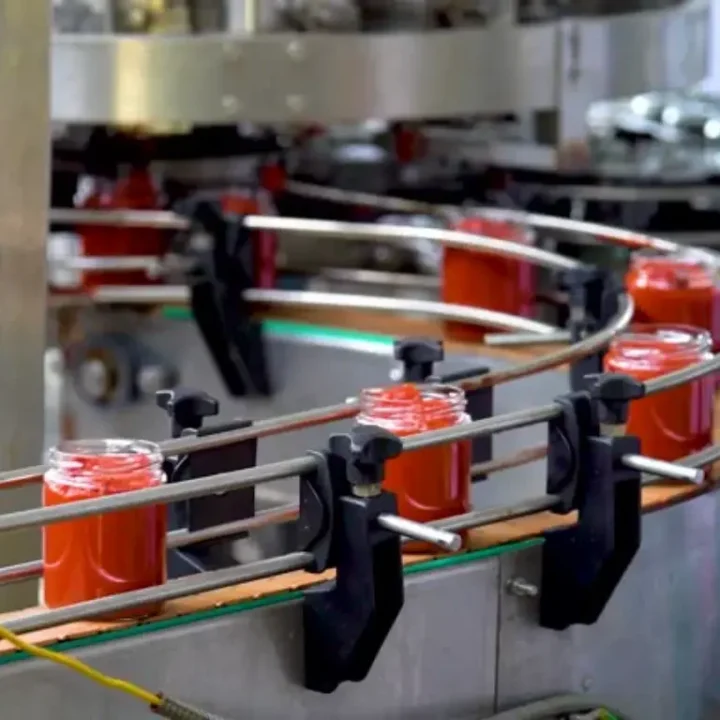
Vijf ploegen, vijf werkwijzen: de onzichtbare oorzaak van kwaliteitsvariatie
Vraag een productiemanager hoeveel werkwijzen er in zijn fabriek zijn, en hij zegt: één. Vraag het daarna aan drie operators van drie verschillende ploegen en je krijgt drie verschillende antwoorden. Hoe voorkom je grote verschillen in werkwijze en kwaliteit?

Dexterity
Every organization has them. Experts who:
- Know exactly what to do for that one glitch
- Come in and immediately hear if the machine is running properly
- Know the most important checks when changing over a line
‘Just wait, if I do two big taps right there, right in that spot, the machine will keep running.’

Optimizing OEE with a knowledge base: how does it work?
Overall Equipment Effectiveness (OEE) is an excellent method to measure your machine efficiency. But how do you turn measurements into concrete improvements? By combining it with a knowledge base filled with (expert) knowledge. How does that work? Let us explain.
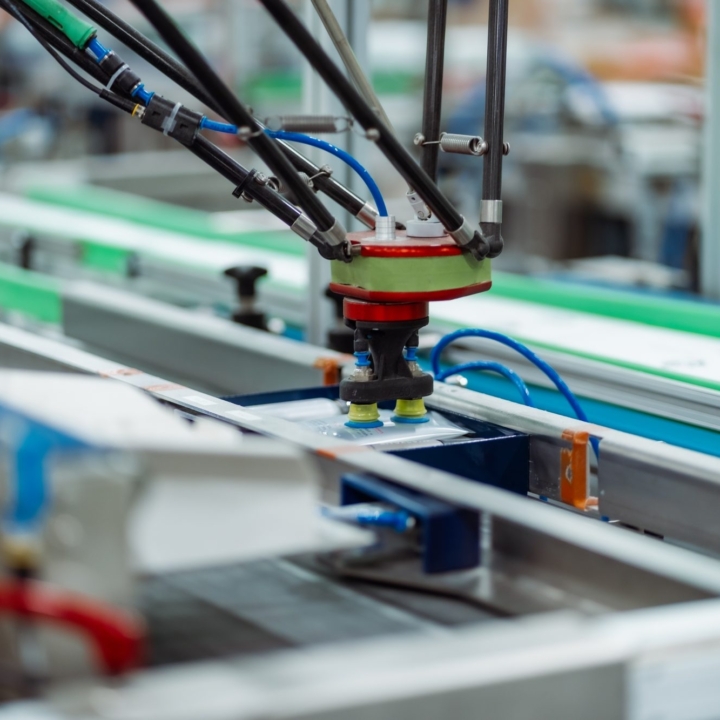
Wie lost deze storing op: operator of TD? Hoe je onduidelijkheid voorkomt op het beslissende moment
Elke fabriek heeft verstoringen die blijven liggen omdat niemand precies weet van wie ze zijn. De operator wacht op de Technische Dienst (TD), de TD wacht op een werkopdracht. En intussen staat de machine stil. Niemand doet het fout, de grens is gewoon niet duidelijk.
Kennis delen zit in ons DNA