Your operators are skeptical about ELICIT. And that’s actually a good sign
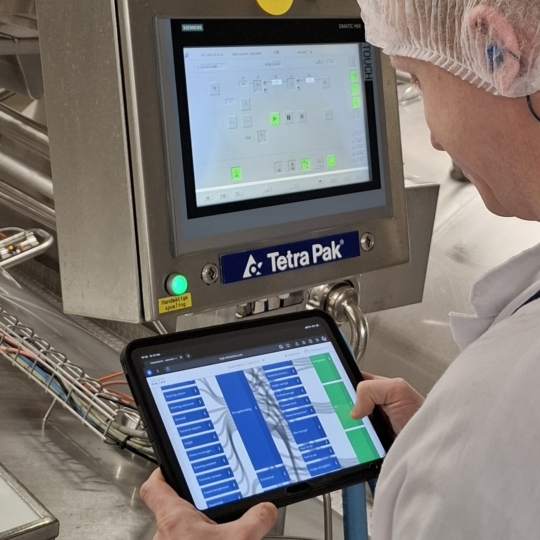
When you introduce a new system on the shop floor as a production manager or team leader, resistance is common. And that’s something to be happy about. It’s a sign that your people are thinking and engaged. You can use that to your advantage for a successful implementation. How to approach it? We explain.
What’s behind the resistance
When an operator has been running a machine for twenty years, he holds knowledge no one else has. He has made mistakes and learned from them, learned from experienced colleagues, and can often see and feel deviations coming before younger colleagues even notice them.
When a team leader says at that point, “We’re going to capture your knowledge in a system,” many operators hear something else. They hear: “We’re going to make you replaceable.” Or worse: “Your way of working isn’t good enough.”
That’s not the intention, but it is how it can feel. There’s also a practical concern: yet another system. Another screen to click through while the line is running. They already have enough on their plate. And that’s true.
The difference between documenting and recognizing
The turning point lies in the message you communicate as a manager or team leader when implementing ELICIT.
The question “Can you show us how you do this?” is fundamentally different from “We’re going to document what needs to be done.” The first question recognizes expertise. The second implies that expertise can be replaced by a procedure.
Operators who are actively involved in capturing their own knowledge, as interviewed experts rather than passive users, become the biggest ambassadors of ELICIT. Because they recognize themselves in it. Their approach, their logic, their solutions.
One operator at a food manufacturing company put it like this: “At first I thought they wanted to automate my job. But when I saw what was in the system, I thought: this is exactly how I do it. Only now everyone can see it.”
“At first I thought they wanted to automate my job. But when I saw what was in the system, I thought: this is exactly how I do it. Only now everyone can see it.”
How to approach the introduction
Turning resistance into acceptance comes down to a series of small, concrete choices in how you design the process. At ELICIT, we approach it like this:
Start with leadership
Before the knowledge file is presented to operators, there is first a discussion with their supervisors. They communicate themselves why the project has started and what their role is in encouraging its use. This way, leadership stands alongside the team, not against it.
Involve the most experienced operator
When the skeptic sees that his colleague, who has been on the line for thirty years, is taken seriously as a source of knowledge, the tone of the conversation changes. In practice, sessions are structured so that the most experienced expert is interviewed first and validates last.
Let the first results speak for themselves
As soon as a new colleague resolves an issue without having to call the expert, and that expert sees it, the perception shifts. Not “my knowledge has been taken,” but “my knowledge now works even when I’m not there.”
Give operators a say in the content
Errors in the system, and there will always be some at the beginning, are not a problem as long as the expert can correct them himself using the suggestion feature. That sense of ownership is key to adoption.
Be honest about the “why”
Operators see straight through vague management language. If the reason is that a senior employee will retire in two years and you don’t want to lose his knowledge, just say so. That is a reason people respect.

“The younger operators still in training immediately saw the value. The more experienced operators followed later.”
CONO Kaasmakers used ELICIT to capture more than 50 years of cheese-making knowledge. Read how the shop floor gradually embraced the model step by step.
The weeks after go-live are crucial
The presentation is just the beginning. The first weeks after go-live determine whether the system sticks. That’s why we work with an evaluation team during implementation: someone who actively drives usage, a point of contact for questions, and someone who monitors progress.
Weekly check-ins during the first weeks, optionally combined with existing team meetings, keep users engaged. They also create space to openly discuss what isn’t working yet. Because that feedback is exactly what improves the system.
Show, don’t tell
Skepticism doesn’t disappear through persuasive words. It disappears by showing it in practice, on the shop floor, with real results. The operators who start out most skeptical often become the most engaged users. But you have to treat them as experts from the very beginning.
Get to know us, no strings attached?
Curious how other production companies approached adoption? Request a demo and see what the knowledge system looks like from the operator’s perspective.
Relevant subjects

POKA, EZ GO, ManualMaster and ELICIT: What’s the difference?
Knowledge management tools all promise the same thing: capturing knowledge, supporting operators, and speeding up training. But how do they actually differ? And which problems do they solve for you? We discuss three well-known solutions, POKA, EZ GO, and ManualMaster, and compare them with ELICIT.

Is ELICIT the right fit for your challenge? These three questions will tell you.
ELICIT works exceptionally well for specific knowledge challenges. However, this does not apply to every situation or organization. When is ELICIT the right fit for your challenge? These three questions make it clear.

You have the experts, but do you also have the knowledge?
You have fifteen operators on the shop floor. Three of them have been working there for more than twenty years. And yet the line comes to a standstill as soon as that one operator, let’s call him Joe, is not there. How is that possible, with so much experience on the floor? And how do you solve it? You’re probably looking in the wrong place.
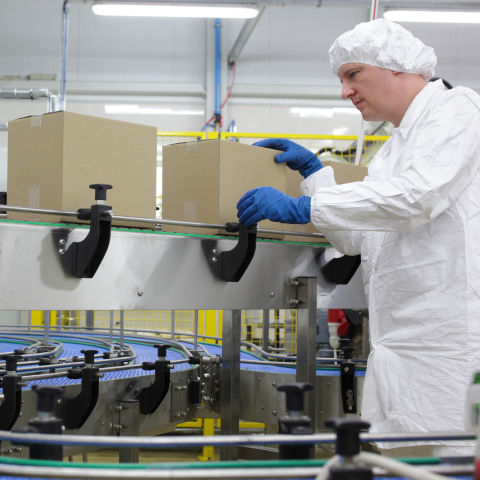
Packaging machines: solving breakdowns
The packaging line is the last crucial step in the production process. This is where value is added by carefully packaging products. When this line runs smoothly, everything seems to run flawlessly.
A modern packaging line in a factory is an interplay of automated processes and complex systems. But even with these systems, problems can arise:

Your experienced expert: an asset, or a bottleneck?
They walk your shop floor: those few senior operators who know the machines inside and out. When something goes wrong, they get the call. Great to have people like that, right? Yes, until they leave, get sick, or retire. And then it turns out your production grinds to a complete halt without them. How do you prevent that?
Kennis delen zit in ons DNA