The real cause of low OEE: Why human knowledge makes the difference

When a production line comes to a standstill, we often point straight to the technology: a faulty sensor or a glich in the system. But the reality is completely different: long downtimes, poor performance, and inconsistent quality are mainly caused by lost experience and work methods that aren’t properly passed on. Research by McKinsey confirms this. To achieve real improvement, we need to look at people.
Machines fail less often than we think
It’s tempting to blame low OEE on the machine. After all, that’s the most visible problem. Yet in practice, the situation is quite different:
- 23% of unplanned downtime in manufacturing is caused by human errors, such as incorrect settings or missed signals.
- On average, factories remain stuck between 55–70% OEE, while world-class companies achieve over 85%.
The gap between average and world-class performance lies mainly in knowledge, experience, and people. Not technology alone. TEEPTRAK’s 2025 benchmark report makes it clear: 80% of OEE improvement potential comes from people and their routines, not from machines.
Technology only works when knowledge is secured and available to everyone on the shop floor
McKinsey
Why things go wrong: broken processes
According to McKinsey, factories face similar challenges: management and the shop floor are not in close contact, feedback is scarce, and digital tools are underused. Even when technology is in place, it often fails to bring lasting improvement because knowledge remains invisible or poorly shared.
The result is the same everywhere: downtime lasts longer, production runs slower, and work standards are applied inconsistently. In some industries, McKinsey warns, this can even lead to quality issues, product rejection, or recalls.
The risk of knowledge loss
In the coming years, these problems will only grow. The manufacturing sector is facing large-scale retirement and turnover. As experienced operators and technicians leave, decades of practical knowledge disappear with them. Without active knowledge capture, new teams repeat old mistakes, leading to quality decline and persistently low OEE.
Five building blocks for sustainable improvement
McKinsey identifies five factors that help companies rebuild their knowledge chain and improve OEE sustainably:
- Clear strategy: Everyone understands the goals and the importance of OEE.
- Desired behavior and culture of continuous learning: Mistakes are discusses, and solutions are shared.
- Connection between management and the shop floor: Short, regular meetings to discuss causes and actions.
- Robust technical systems: Reliable machines and processes that support operators.
- Technology that empowers people: Digital tools that make work standards and solutions instantly accessible.
Organizations that combine these building blocks achieve higher production results, retain their staff, increase customer satisfaction, and improve sustainability performance.
How to create change on the shop floor
Reports and recommendations are valuable, but they only matter when you can apply them concretely in daily operations. Here are the key steps you can take to sustainably improve OEE:
- Capture best practices and troubleshooting solutions and keep them up to date.
- Establish regular check-ins between management and operators to discuss causes and actions.
- Make performance and work standards visible on boards or digital displays at the line.
- Fix once, share always: Record deviations and share solutions immediately with the team.
- Invest in continuous training so operators solve issues faster and prevent errors.
Conclusion: Start with people, not machines
Machines are rarely the real cause of low OEE. Lost knowledge and poor knowledge transfer are the biggest barriers to productivity. As McKinsey puts it: technology only works when knowledge is secured and accessible to everyone on the shop floor.
Organizations that capture knowledge, empower operators through training and digital tools, and lead with a consistent rhythm of feedback and learning restore the knowledge chain, and make world-class OEE performance achievable.
Have questions?
Would you like to improve your organization’s OEE and learn how to leverage knowledge to make it happen? Get in touch with us, we’d be happy to share how we can support you!
Relevant subjects

Optimizing OEE with a knowledge base: how does it work?
Overall Equipment Effectiveness (OEE) is an excellent method to measure your machine efficiency. But how do you turn measurements into concrete improvements? By combining it with a knowledge base filled with (expert) knowledge. How does that work? Let us explain.
You have the experts, but do you also have the knowledge?
You have fifteen operators on the shop floor. Three of them have been working there for more than twenty years. And yet the line comes to a standstill as soon as that one operator, let’s call him Joe, is not there. How is that possible, with so much experience on the floor? And how do you solve it? You’re probably looking in the wrong place.
Your operators are skeptical about ELICIT. And that’s actually a good sign
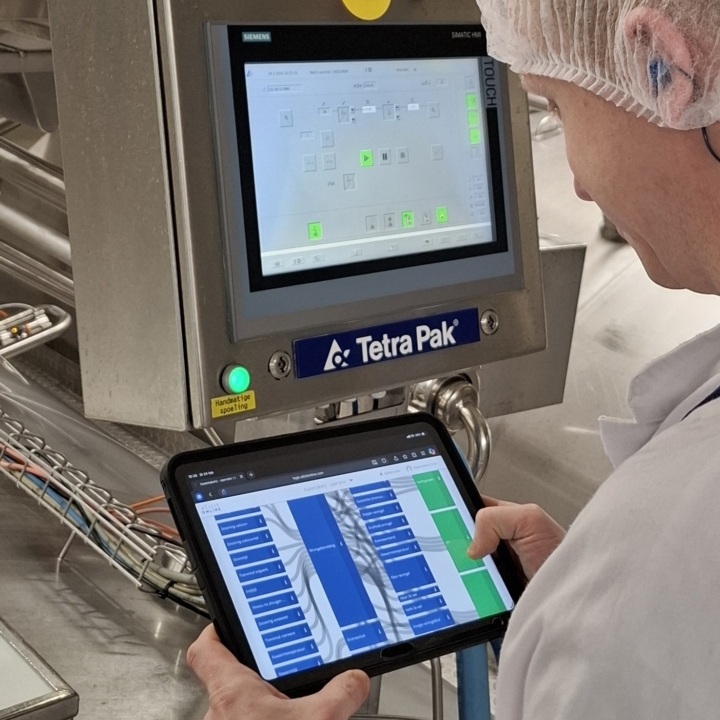
When you introduce a new system on the shop floor as a production manager or team leader, resistance is common. And that’s something to be happy about. It’s a sign that your people are thinking and engaged. You can use that to your advantage for a successful implementation. How to approach it? We explain.
Wie lost deze storing op: operator of TD? Hoe je onduidelijkheid voorkomt op het beslissende moment
Elke fabriek heeft verstoringen die blijven liggen omdat niemand precies weet van wie ze zijn. De operator wacht op de Technische Dienst (TD), de TD wacht op een werkopdracht. En intussen staat de machine stil. Niemand doet het fout, de grens is gewoon niet duidelijk.

The Importance of Performance Support for Manufacturing Companies
What is Performance Support?
Performance Support is a way to help people work faster and more efficiently. It is software that has a clear and easily accessible structure to the right information. Performance Support can help with knowledge transfer to facilitate the learning process. This is especially useful when it comes to specific knowledge for working with systems (machines or equipment) that can be complicated and difficult to explain.
Kennis delen zit in ons DNA