
“With ELICIT, we want to move away from constantly putting out fires and towards process optimization.”
Production at Total Packaging in Harderwijk is growing rapidly. New lines, new shifts, new employees and one experienced box maker whose knowledge the organization heavily depends on. Dirk Bilardie (Manager Continuous Improvement) and Dave Kuijsten (Production Team Manager) explain how they are capturing that knowledge before the experienced specialist retires.
Growing while knowledge becomes diluted
The market for high-end packaging solutions is booming. And if anyone knows that, it’s Total Packaging in Harderwijk. The 111-year-old producer of luxury cardboard packaging is growing rapidly. The past few years have been marked by brand-new factories, major expansion of the machine park, and a huge influx of new employees. “Around 80 percent of our current operators have been with us for less than two years,” says Dave Kuijsten. “Some of them don’t have a background as an operator, let alone in the paper or cardboard industry. So they still have a lot to learn about our craft.”
“When the team leader and Technical Service can’t figure it out, they call Willem. If there’s an issue with a substrate or material, they call Willem. But as we continue to grow, we can’t stay dependent on that one expert.”
Dirk Bilardie, Manager Continuous Improvement Total Packaging
The “jokers” are disappearing
Of course, there are training plans, work instructions, and shadowing periods to transfer this knowledge. But that is only the tip of the iceberg. “We have documented the electromechanical side of things, but knowledge about box-making techniques, toner, glue, and paper lives in the heads of a small group of experienced people,” explains Dirk Bilardie, himself one of those experienced specialists.
“And especially box maker Willem is our ‘joker,’ with 26 years of experience. When everything runs smoothly, people manage fine. But if there’s a problem before half past seven in the morning, they call Willem. If the team leader and Technical Service can’t solve it, they call Willem. If there’s an issue with a substrate or material, they call Willem. But as we continue to grow, we can’t remain dependent on those few experts. And besides, Willem will retire in two years. We need to get more new people up to a high knowledge level.”
The ELICIT knowledge model
While searching for a solution, Total Packaging came across ELICIT. After running a pilot with ELICIT, as part of a Technical Development Path project by Landstede Groei Opleidingen and TWI Company, they were convinced. ELICIT interviewed Willem about the knowledge he had built up over 30 years and translated it into an interactive knowledge model that can be consulted directly at the production line.
Dave: “The knowledge model maps out a production line. From there, you can reason backwards from an end-product issue, for example, packaging with the wrong shape, to possible causes. Using logical, visual connections. That helps an operator tremendously. You know exactly where to look, even if you have little experience. Even a junior Technical Service employee benefits from it.”
Dirk adds: “The knowledge model provides guidance. If problem X occurs, where should I look? If it’s not A, maybe B, maybe C. It really structures an operator’s way of thinking.”
From the bottom of the cabinet to right beside the line
The first version of the knowledge model was presented on a tablet. The reactions were not enthusiastic. “Our knowledge model was actually too large for that. Operators had to scroll and swipe, and then it just doesn’t work. If it isn’t easy, the device ends up at the bottom of the cabinet after three uses. They said: it has to be user-friendly.”
The solution turned out to be quite simple: ELICIT on a movable computer beside the production line. A large screen, keyboard, and mouse. Dave: “You simply roll the device right up to the disruption. It’s a small detail, but it makes a huge difference. The threshold is low enough now. And I’m hearing positive reactions about the model’s content.”
“The knowledge model provides guidance. If problem X occurs, where should I look? If it’s not A, maybe B, maybe C. It really structures an operator’s way of thinking.”
Dirk Bilardie
A standard step
Now that the pilot has been completed, implementation into daily practice has begun. Team leader by team leader, operator by operator. Before the summer holidays, it should be fully rolled out across all ten packaging lines.
What do Dirk and Dave hope to see in the coming months? Dirk is clear: “ELICIT should become a standard step whenever there are deviations or problems. Have you already checked the model? Do that first.”
Dave adds: “It’s also great if it encourages people to think along. Through the suggestion feature, employees can propose smart actions or solutions and, after review, add them to the model. That turns it into a living document with increasing value.”
Optimizing instead of constantly putting out fires
With ELICIT, the enormous amount of experiential knowledge in Willem’s head becomes available to the growing group of box makers and operators. This means he can eventually retire with peace of mind, without still receiving phone calls afterward. “It’s fantastic that we can preserve this unique knowledge and continue expanding it over the next two years, while Willem is still here,” says Dirk. “I don’t have the illusion that we can fully capture all 30 years of experience and creativity, but even part of it is already extremely valuable to us.”
“Right now, we’re purely focused on the basics. That’s frustrating. Once that pressure disappears, you can finally have the conversations you really want to have: what else can we improve?”
Dave Kuijsten, Production Manager Total Packaging
With that knowledge readily available, the focus can finally shift more toward improving production instead of dealing with daily operational issues. Dave: “Right now, we’re purely focused on the basics. That’s frustrating. Once that pressure disappears, you can finally have the conversations you really want to have: what else can we improve? Not constantly putting out fires, but optimizing. That’s where we want to go with ELICIT in the coming years.”
Relevant cases


Burg Azijn safeguards the expertise of master brewers and standardizes natural vinegar production.
The refined production process of natural vinegar at Burg Azijn (part of the Burg Group) used to exist mainly in the minds of a small group of master brewers. With the help of ELICIT, they reduce their dependence on specialists and achieve consistently high quality through a standardized approach.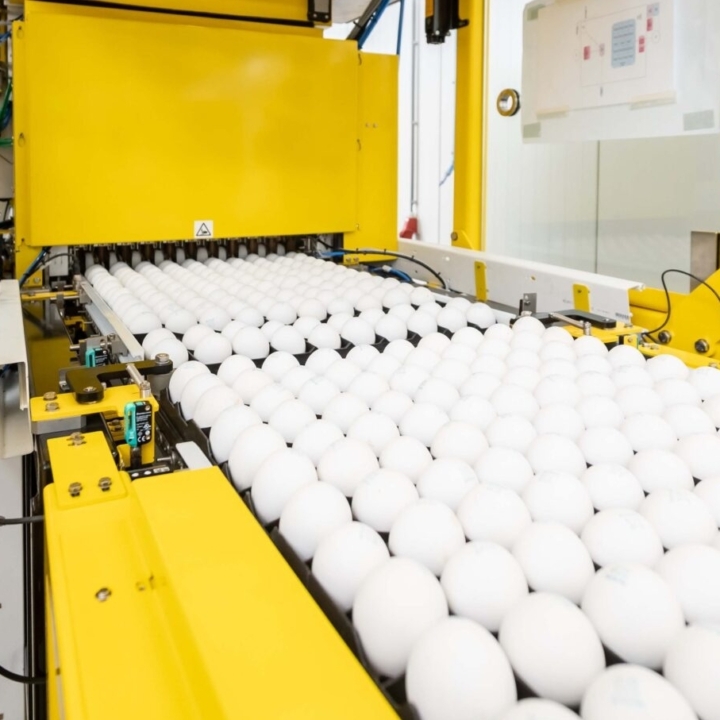
In Ovo: Standards for a global rollout
In Ovo leads the field of in-ovo sexing technology with their revolutionary machine line, Ella. This advanced system can determine the sex of fertilized chicken eggs early in the incubation process, allowing for the removal of male eggs before they develop into chicks. This innovation eliminates the need for the controversial practice of destroying live male chicks, which remains common in today's poultry industry.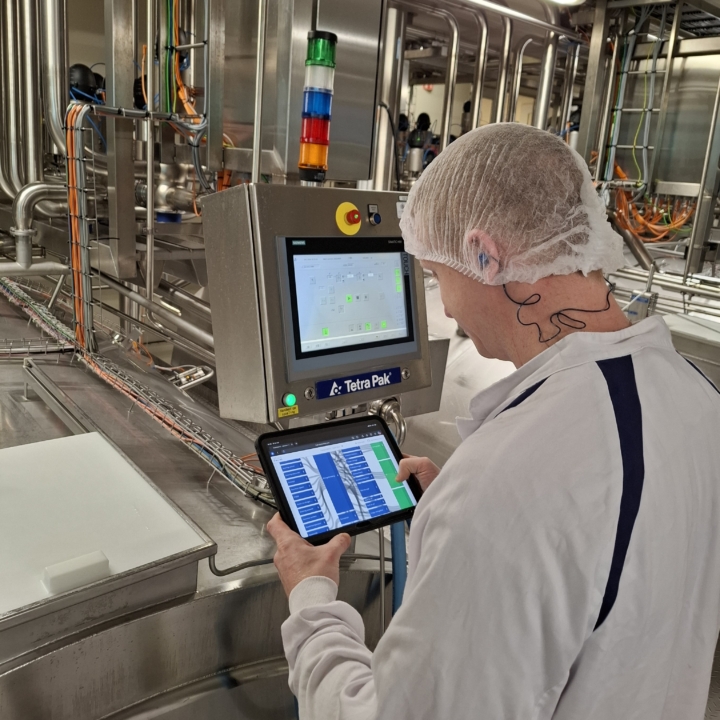
When the master leaves: how CONO preserves half a century of cheese-making expertise
The retirement of team leader Pieter (50.5 years of experience) confronted cheese producer CONO with a major challenge: how do we ensure that the knowledge of such experienced people is retained? Arthur van Esveld, Production Manager, and Mike Koster, the new Team Leader Cheese Production, explain: “With ELICIT, every operator has autonomy.”

Mondi: Faster training and less unplanned downtime
Mondi Heerlen is part of Mondi, a global leader in the sustainable paper and packaging industry. Mondi Heerlen produces release liner, a product used in the production of feminine hygiene products, among others.

Casting legend Olle Lofgren heads for the snow, but his knowledge stays in Zutphen
There is hardly anyone in the world with more casting knowledge than Olle Lofgren. But after more than 50 years in the metal industry, working in factories all over the world, the Swedish casting specialist is retiring from KME. With the help of ELICIT, he is now leaving his knowledge behind for future generations. Olle: “It felt like someone opened my memory of the past decades.”
Sharing knowledge is in our DNA